
 What a Service Call Actually Covers
A breakdown of what a Milford garage door service call actually checks, built around this city's 1960s-70s housing stock and cold-climate hardware wear.
BlogMilford, CT · 4 min read
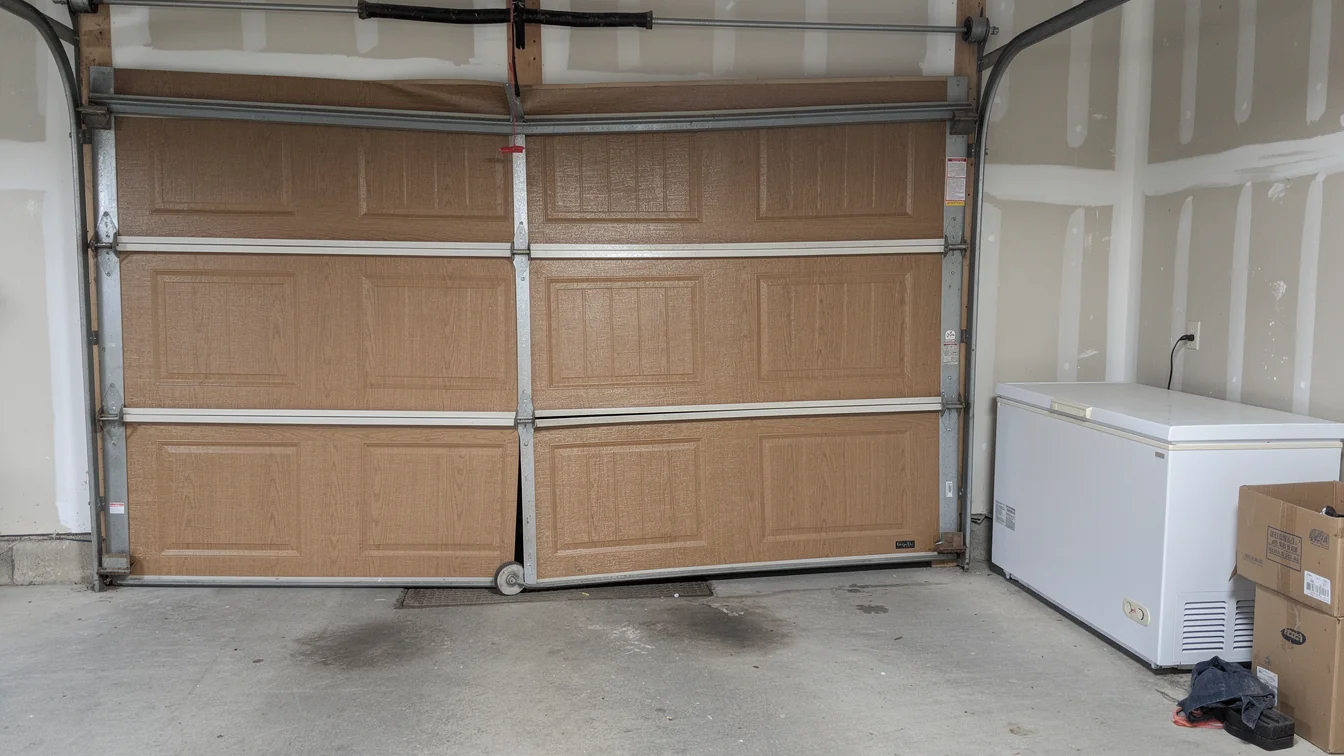
Why a Garage Door Goes Off Track in Milford
Milford's 1960s-70s housing stock and cold winters push garage door tracks out of line. Here's why it happens and what actually fixes it.
Local detail
How Local Conditions Play In
Most of the garage doors we look at in this part of Connecticut sit on houses built between 1954 and 1986, with the bulk going up in the 1960s and '70s. That matters because the track hardware from that era was bolted to wood jambs that have had fifty-plus years to shift, settle, and dry out. A track that was plumb in 1971 is rarely plumb now, and nobody re-shimmed it along the way.
Then there's the cold. This is a severe cold-climate zone, and that means real freeze-thaw cycles every winter, not just a cold morning here and there. Water gets into the slab seam at the base of the track, freezes, expands, and nudges the bottom bracket a fraction of an inch. It doesn't take much - a track only needs to be off by about a quarter inch over its length before rollers start climbing the lip instead of riding inside it.
In a newer house with poured, cured concrete and factory-square framing, this is a smaller problem. In the housing stock that makes up most of this area, it's the single biggest reason doors jump track - not one dramatic event, just decades of small shifts in old lumber and old slabs.
The area
Where People Go Wrong
The common mistake is treating a derailed door like a bent-track problem only. People grab a rubber mallet, tap the rail back into rough alignment, and call it fixed. On a house from the 1971 median build year, that's a patch, not a repair - the jamb behind the track has already moved, and it will move again with the next freeze cycle.
The other mistake is ignoring which side jumped. If it's consistently the same side, year after year, that's usually a sign the slab or jamb on that side has settled unevenly - common on homes in this area with original foundations and no later underpinning work. Re-tapping the same spot every winter without addressing the bracket anchoring just means doing it again next January.
We also see people tighten the track bolts down hard after a derail, thinking tighter is safer. On old wood framing that's already splitting at the screw holes, over-tightening just strips the hole further and gives the next freeze even more room to work with.
What we find
Leaving It Alone
A door that's jumped track once and gotten pushed back by hand isn't fixed - it's one more shift away from coming off a roller bracket entirely, which can drop a panel edge onto a vehicle or a foot. We won't pretend every off-track door is an emergency, but once it's happened twice on the same side, the bracket anchoring needs to be checked, not just the rail.
There's also a cost curve here. A track realignment with a bracket re-anchor, caught early, is a straightforward job. Left through another cold season on 1960s-70s framing, the wood around the lag screws can split enough that the bracket needs a new mounting point entirely, which is more labor and more parts. None of this is dramatic - it's just the kind of thing that gets worse quietly instead of all at once.
How we work
The Problem
Strip it down to the mechanics: the track holds the rollers in line, the rollers carry the door's weight, and both depend on brackets anchored to framing that was square once and isn't anymore. In a service area where median household income runs $126,807 and most of the housing stock dates to the 1960s and '70s across the 35 named neighborhoods we work in, that framing has had decades of freeze-thaw and settling to work against it.
We'll be honest about what we don't do: we don't replace a track section without also checking the bracket and the jamb behind it, because swapping a rail onto a loose mount just buys you a repeat call next winter. If the jamb itself is too far gone to hold a bracket properly, that's a carpentry fix before it's a garage door fix, and we'll tell you that instead of forcing a door part to solve a wood problem.
Questions
Common questions
Why does my garage door keep coming off track every winter?
On houses built in the 1960s and '70s, which make up most of the stock in this area, the slab seam and wood jamb have had decades of freeze-thaw cycles to shift the track bracket slightly. Each winter's expansion and contraction nudges it a little further, so the same side keeps slipping until the bracket anchoring itself is corrected.
Is a bent track always the cause of a door going off track?
Not usually. In older local homes the track itself is often fine - the problem is the bracket mount behind it has loosened in wood that's dried and shifted over fifty-plus years. Bending the rail back by hand fixes the symptom for a week, not the cause.
Can I just tighten the track bolts myself?
You can check them, but on older wood framing that's already split slightly at the screw holes, over-tightening strips the hole further. If the bolts won't hold snug anymore, the fix is a new anchor point, not more torque on a failing one.
Recommendation
You Might Also Like
More garage door guides for Milford homeowners.
What a Service Call Actually Covers
A breakdown of what a Milford garage door service call actually checks, built around this city's 1960s-70s housing stock and cold-climate hardware wear.
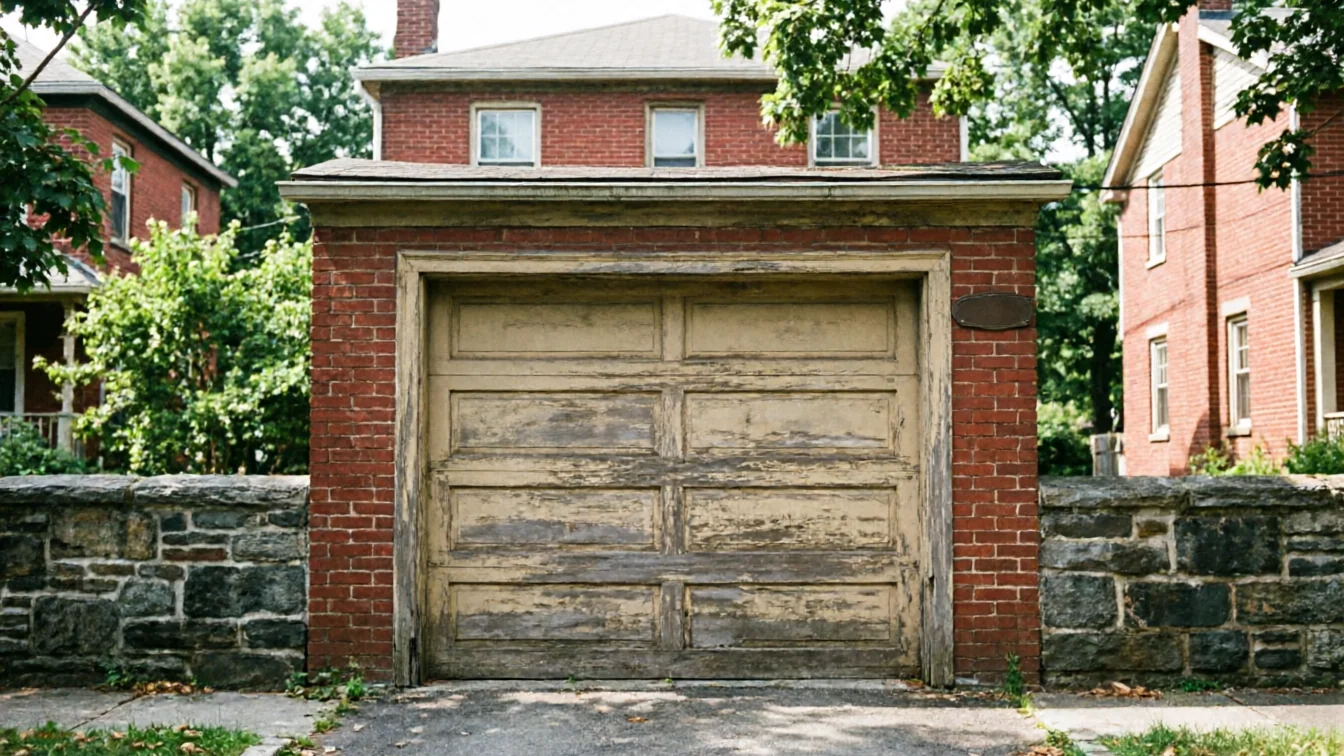 What's Worth Fixing on an Older Milford Garage Door
Milford Garage Door Pros explains which 1960s-70s era garage doors across Milford's older housing stock are worth repairing before cold, damp winters hit.
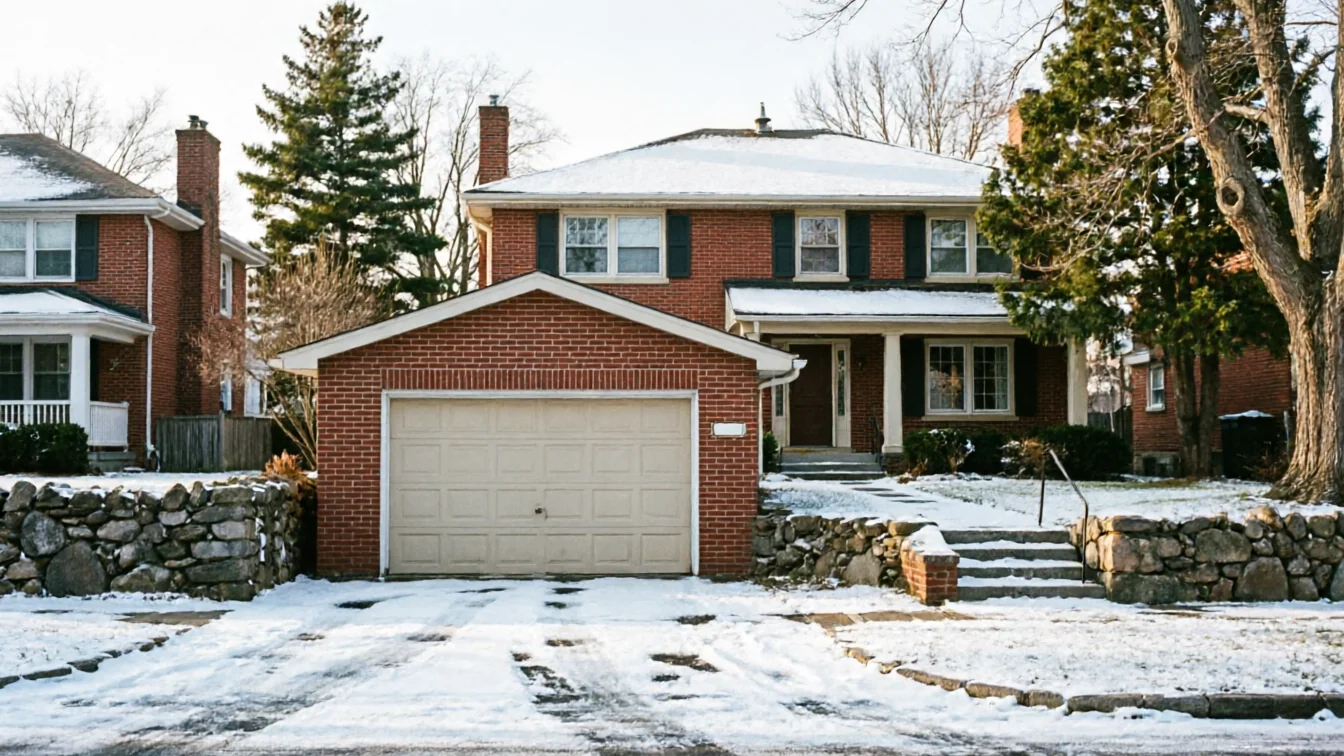 Why Milford's Older Housing Stock Loses Springs in a Cold Snap
Milford homes built mostly between 1954 and 1986 have torsion springs that fail more often in sharp cold snaps.
Ready when you are
Need a garage door sorted in Milford?
Milford Garage Door Pros repairs and installs garage doors, springs and openers in Milford, CT and the surrounding area.