 Why Milford's Older Housing Stock Loses Springs in a Cold Snap
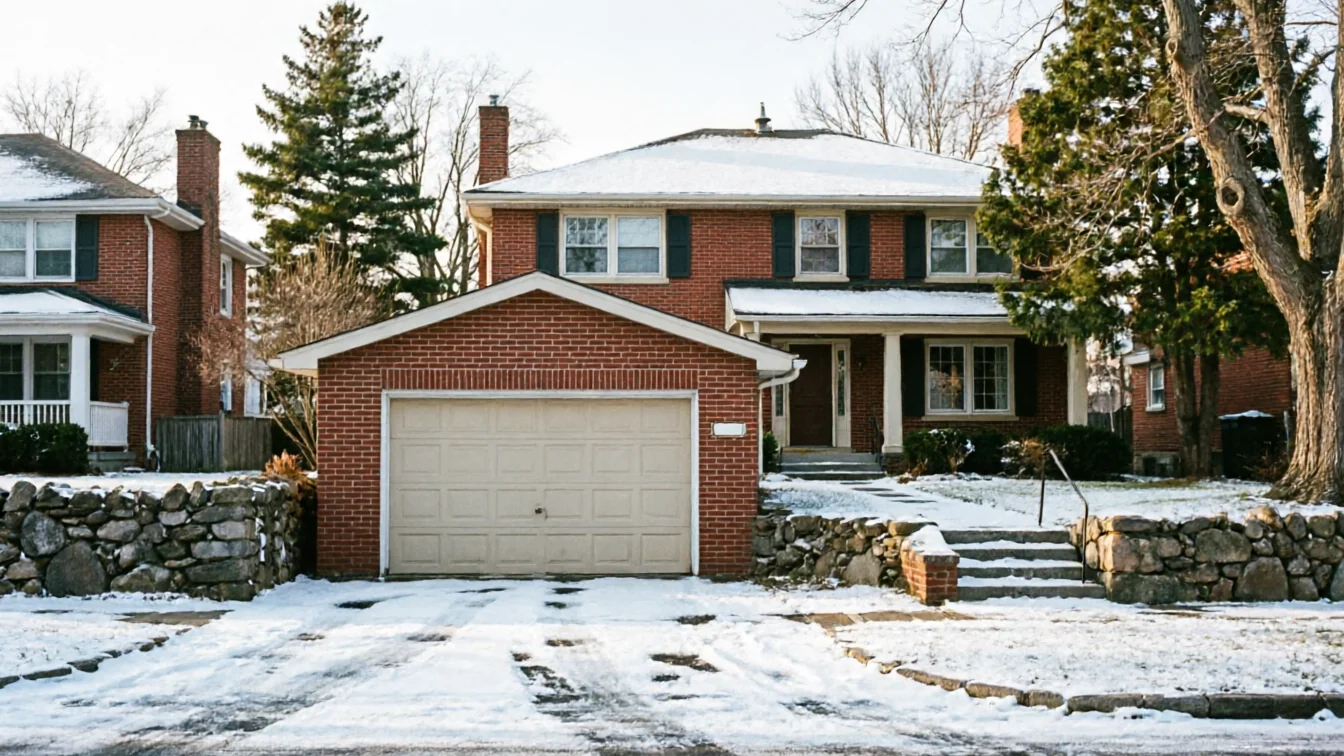
Milford homes built mostly between 1954 and 1986 have torsion springs that fail more often in sharp cold snaps.
BlogMilford, CT · 4 min read
What That Grinding, Popping, or Banging Sound Actually Means
Milford homes built mostly between 1954 and 1986 have original garage hardware that grinds, pops, or slams in cold weather - here's what each sound means.
Local detail
How Local Conditions Play In
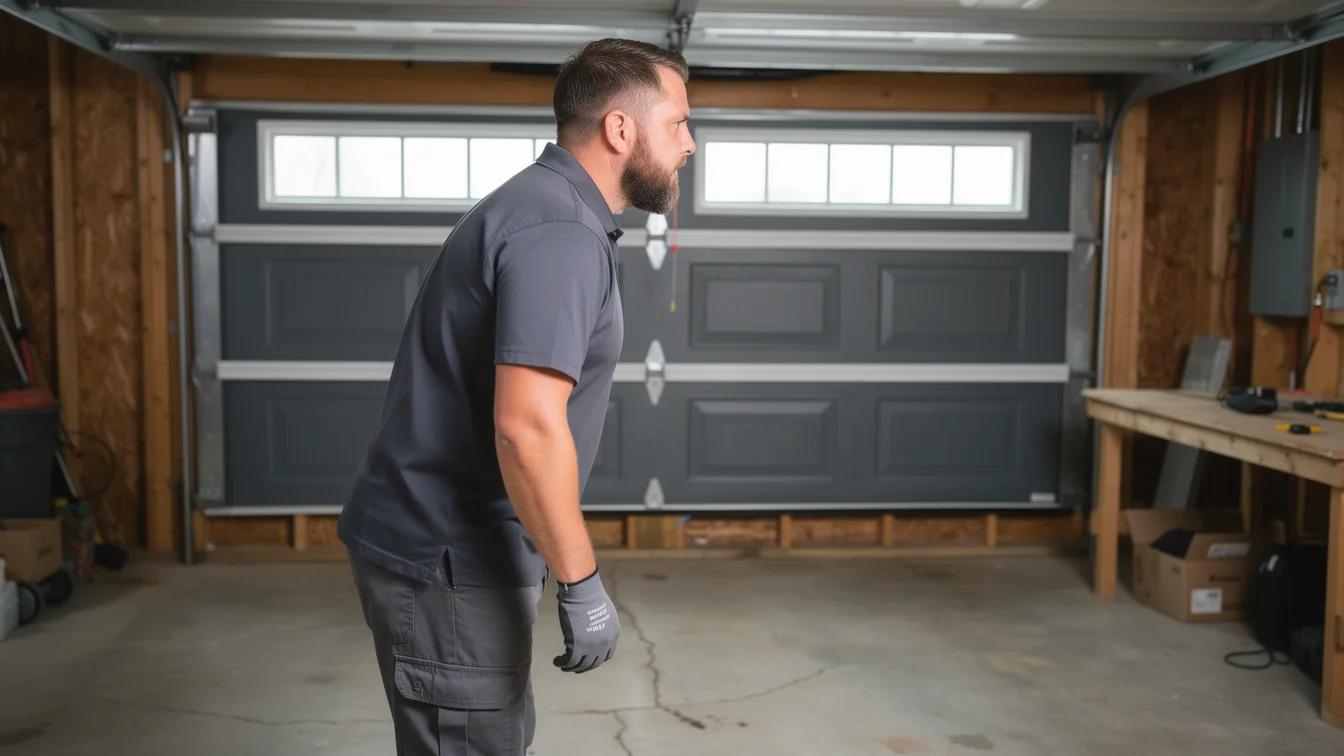
Most of the garage doors we look at in Milford sit on houses built between 1954 and 1986, with the median landing around 1971. That's a lot of original torsion hardware, original rollers, and original track still doing the job it was built for fifty-plus years ago. Steel contracts in the cold, and this is a severe cold climate zone - the kind where a spring that's been fine all October suddenly starts barking every time it cycles in January. A door that was quiet all fall and starts groaning the first hard freeze isn't malfunctioning out of nowhere. The metal shrank, the lubrication thickened, and the tolerances that were already worn from decades of cycles just got tighter. On a newer door in a milder climate you might not hear it for another two winters. Here, the cold exposes wear faster than the calendar would suggest. That's the piece people miss: the noise usually isn't new damage, it's old wear finally talking once the temperature drops enough to take up the slack in loose hardware and dry bearings.
The area
Where People Go Wrong
The most common mistake is spraying WD-40 on everything and calling it fixed. That product is a solvent, not a lubricant - it strips the factory grease out of the rollers and bearings instead of adding to it, so the squeak goes quiet for a week and comes back louder. On hardware this old, that cycle just accelerates wear on parts that were already near the end of their life. The second mistake is assuming every noise is the opener. In houses from this era the opener is often not original - it's been swapped once or twice - but the track, hinges, and torsion spring frequently are original or close to it. People replace a perfectly good motor chain and the grinding keeps going because the real source was a dry hinge pin three feet away. The third mistake is ignoring a rhythmic thump that lines up with one specific panel. That's usually a roller or a bent hinge on that panel, not a system-wide problem, and treating it like one means paying to fix parts that were never broken.
What we find
Leaving It Alone
A door that's noisy but still opening feels low priority, and most of the time it is - for a while. But a cable that's started to fray makes a distinct intermittent popping sound as strands catch on the drum, and that one doesn't get quieter with lubricant. It gets worse until the cable lets go, usually with the door partway up or down. A torsion spring that's winding down to failure often makes a dull, deepening thud on each cycle in the weeks before it breaks. Neither of those is an emergency the first week you hear it. Both of them are on a clock. Given how much of the local housing stock still has its original or first-replacement torsion spring from the 1960s-70s build era, a lot of these systems are simply past the point where sound is a minor issue - the noise is often the last warning before a part that's under real tension lets go. We'd rather get a call for a noise that turns out to be nothing than a call for a door that came down on something.
How we work
The Problem
Here's the honest limit: not every noise is worth a service call, and we won't tell you it is. A light rattle on a door you rarely use, or a squeak that shows up once a year on the first cold snap, is often just stiff grease and doesn't need a truck out. What does need a look is anything new, anything that's gotten louder over a few weeks, or any sound tied to a specific motion - grinding only on the way up, a bang only near the top of travel, a pop that happens at the same point in the cycle every time. On hardware this old, patterns like that usually point to a part at the end of its service life rather than something you can grease your way out of. We can tell you over the phone whether what you're describing sounds like a five-minute adjustment or a spring job, but we can't diagnose torsion tension or cable wear without eyes on it.
Questions
Common questions
Why does my garage door only make noise in the winter?
Cold makes steel contract and thickens old grease, which tightens up tolerances that were already loose from years of cycling. In a severe cold climate zone like this, a door that's been quiet since spring often starts complaining the first hard freeze - it's usually wear that was already there, just more audible once the metal shrinks.
Is WD-40 okay to use on a noisy garage door?
Not for the moving hardware. It's a solvent and will strip factory grease from rollers and bearings rather than lubricate them, so the noise comes back worse within a week or two. A silicone or lithium-based garage door lubricant on the rollers, hinges, and track is the better call.
My garage door makes a popping sound - is that the cable?
A fraying cable often makes an intermittent pop as strands catch on the drum, and it tends to worsen rather than quiet down. Given how much of the local housing stock still runs original or first-replacement hardware from the 1960s-70s, this is worth having looked at rather than waiting out.
Do I need to replace the whole door if it's just noisy?
No - most noise complaints trace to a specific part: a roller, a hinge, a spring, or a cable, not the whole door. On houses from this build era the door panels themselves often outlast the moving hardware, so a repair to the specific noisy part is usually the right first step, not a full replacement.
Recommendation
You Might Also Like
More garage door guides for Milford homeowners.
Why Milford's Older Housing Stock Loses Springs in a Cold Snap
Milford homes built mostly between 1954 and 1986 have torsion springs that fail more often in sharp cold snaps.
 Weather Seals and Draughts in Milford Garage Doors
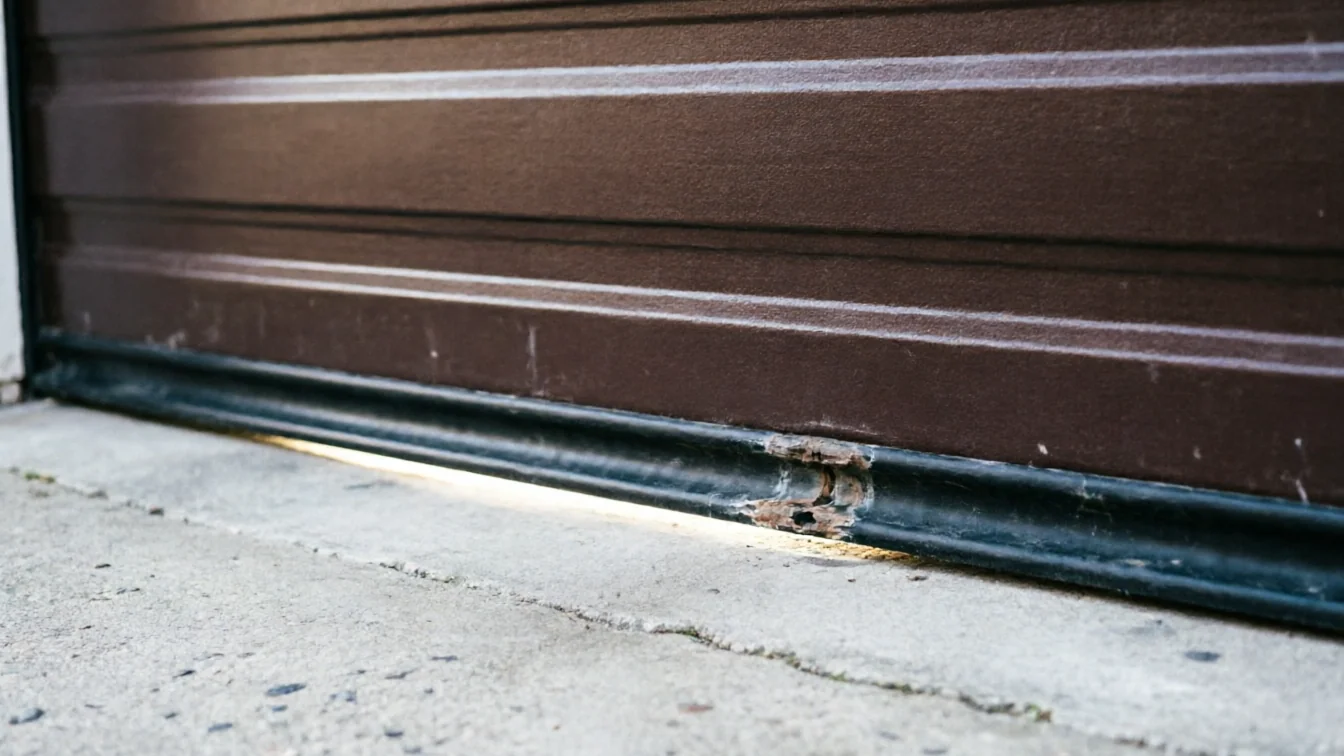
Milford homes built mostly 1954-1986 face real cold-climate draught problems at the garage door.
 What We Check First on a Milford Garage Door Call
Milford homes built mostly between 1954 and 1986 bring specific garage door wear in cold Connecticut winters.
Ready when you are
Need a garage door sorted in Milford?
Milford Garage Door Pros repairs and installs garage doors, springs and openers in Milford, CT and the surrounding area.