
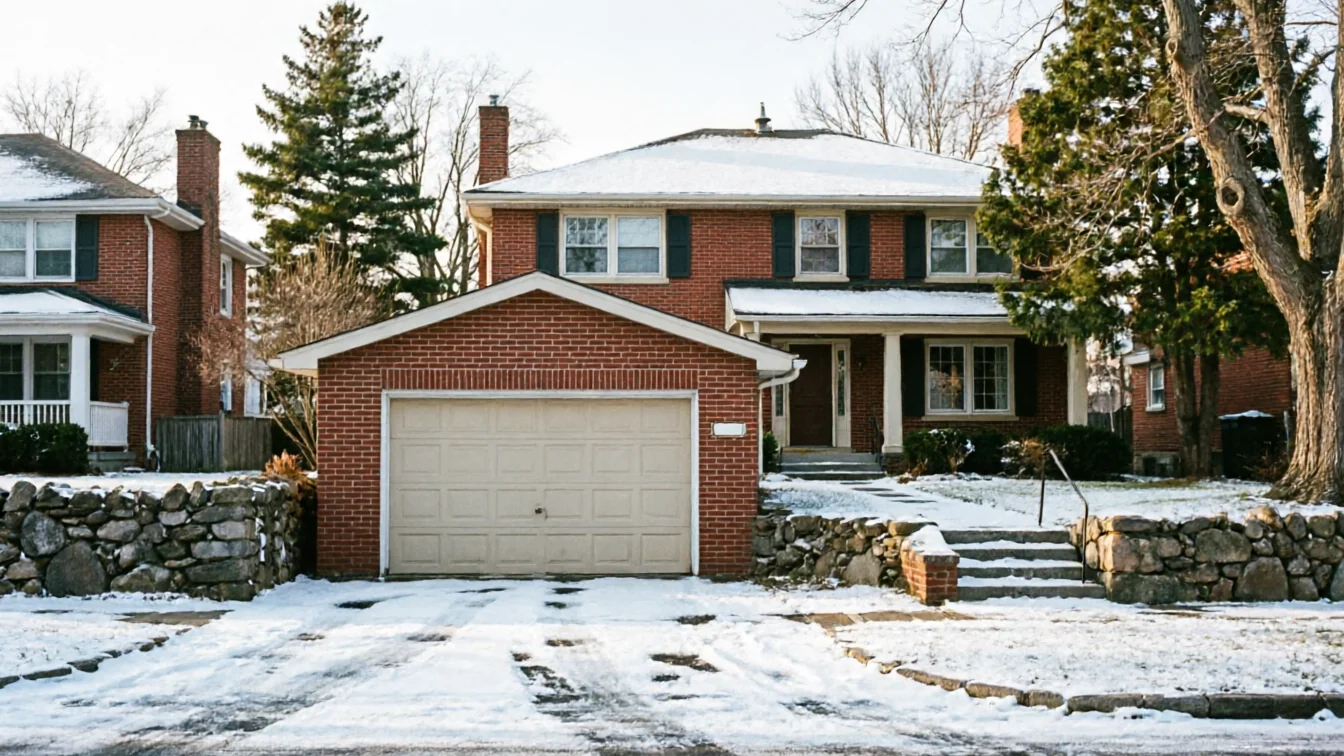
 Why Milford's Older Housing Stock Loses Springs in a Cold Snap
Milford homes built mostly between 1954 and 1986 have torsion springs that fail more often in sharp cold snaps.
BlogMilford, CT · 4 min read
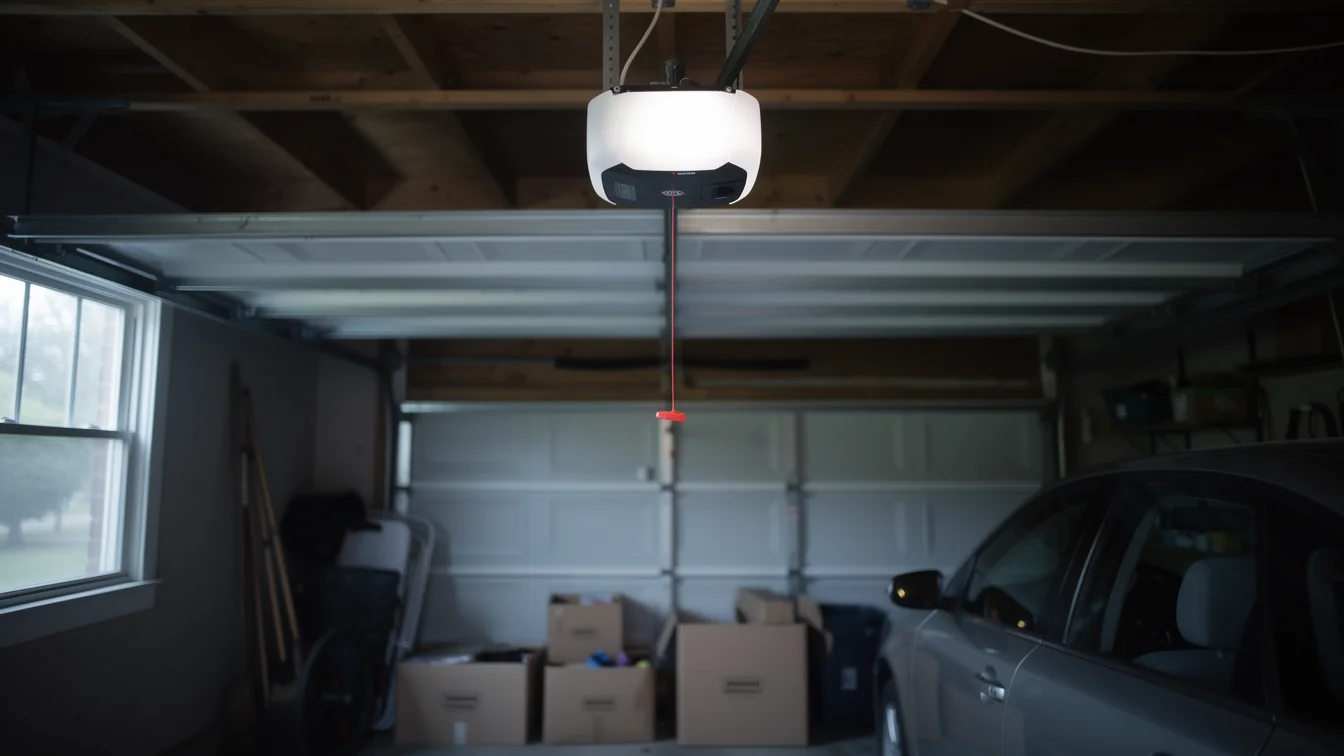
When the Power Drops, Your Opener Shows Its Age
Milford homes built 1954-1986 often pair old openers with manual release levers nobody's touched. Here's what power cuts expose in this housing stock.
Local detail
How Local Conditions Play In
Most houses on this stretch of Milford went up between 1954 and 1986, with the median build year sitting around 1971. That matters for openers because a huge share of those garages still run a chain-drive unit installed sometime in the 80s or 90s, long before battery backup was standard equipment. When the power goes out in a cold-severe climate like this one, the garage is often the only way in or out of the house without walking through snow in the driveway. An opener with no backup battery and a manual release nobody's located in years turns into a real problem the first time a winter outage hits. The 1960s-70s stock across the thirty-five named areas in this service territory tends to share the same setup: a single wall switch, a chain drive bolted to ceiling joists from the original build, and a release cord that's been painted over or buried under insulation since the Carter administration. None of that is a design flaw from back then - it's just old. The issue is that nobody updated the failsafe when the rest of the house got remodeled.
The area
Where People Go Wrong
The most common mistake is assuming the opener will just reset itself when power comes back. Sometimes it does. Often, on units from the 1971-era housing stock that's typical here, the logic board doesn't recover cleanly and the door sits mid-travel or refuses to respond to the remote at all. People then start pulling on the emergency release without knowing which direction the door is sitting under spring tension, which on an older torsion setup can snap a finger or drop the door fast. Another mistake: running an extension cord to the opener during an outage. That's not a fix, and on a circuit built for a mid-century garage it's a fire risk, not a workaround. The third mistake is waiting until the next outage to deal with it. If your opener has no battery backup and your house falls in that 1954-1986 build window, the time to find the manual release and test it is on a calm Saturday, not during a cold-severe outage when the driveway's iced over and you need the car out.
What we find
Leaving It Alone
Ignoring an opener that struggles after every power cut doesn't cost you anything until it does. On the older units common in this housing stock, repeated hard resets after outages put stress on the logic board and the drive gear, and that wear adds up faster than people expect. A unit that's handled two decades of outages without a backup battery is already past what the manufacturer rated it for. We've seen units keep limping along for another year after a rough outage and we've seen the gear strip on the very next cycle - there's no way to predict which one you've got without opening the housing, and we'll tell you plainly if a repair isn't worth it on a unit that old.
How we work
The Problem
The core issue is a mismatch: climate-cold-severe conditions mean outages happen, and a large share of the opener stock in Milford homes built from 1954 through 1986 was never designed with that in mind. No battery backup, a release mechanism nobody maintains, and wiring original to a house with a median build year of 1971. That's not a flaw in any one opener - it's what happens when forty- and fifty-year-old equipment meets a modern expectation that the garage door always works. Fixing it usually means adding battery backup to the existing opener or replacing the unit outright if the drive train shows wear, not rewiring the whole garage.
Questions
Common questions
Why does my opener stop working completely after a power outage in Milford?
On older chain-drive openers common in homes built in the 1954-1986 window, the logic board sometimes doesn't recover its position reference after a hard power loss. Without battery backup, the unit just sits dead until you manually release the trolley and move the door by hand, then reset the opener once power's stable.
Should I add battery backup to my existing opener or replace the whole unit?
If the opener is newer and otherwise running fine, a battery backup add-on usually works. If it's an original unit from a 1960s-70s build with visible gear wear or a failing chain, replacement is the better call - we'll look at the drive train before recommending either.
Where's the manual release on an old opener and is it safe to pull during an outage?
It's the cord hanging near the trolley on the track, often painted over on older installs. It's safe to pull once the door is fully closed or fully open - never mid-travel, since the spring tension can let the door drop fast on an older torsion setup.
Recommendation
You Might Also Like
More garage door guides for Milford homeowners.
Why Milford's Older Housing Stock Loses Springs in a Cold Snap
Milford homes built mostly between 1954 and 1986 have torsion springs that fail more often in sharp cold snaps.
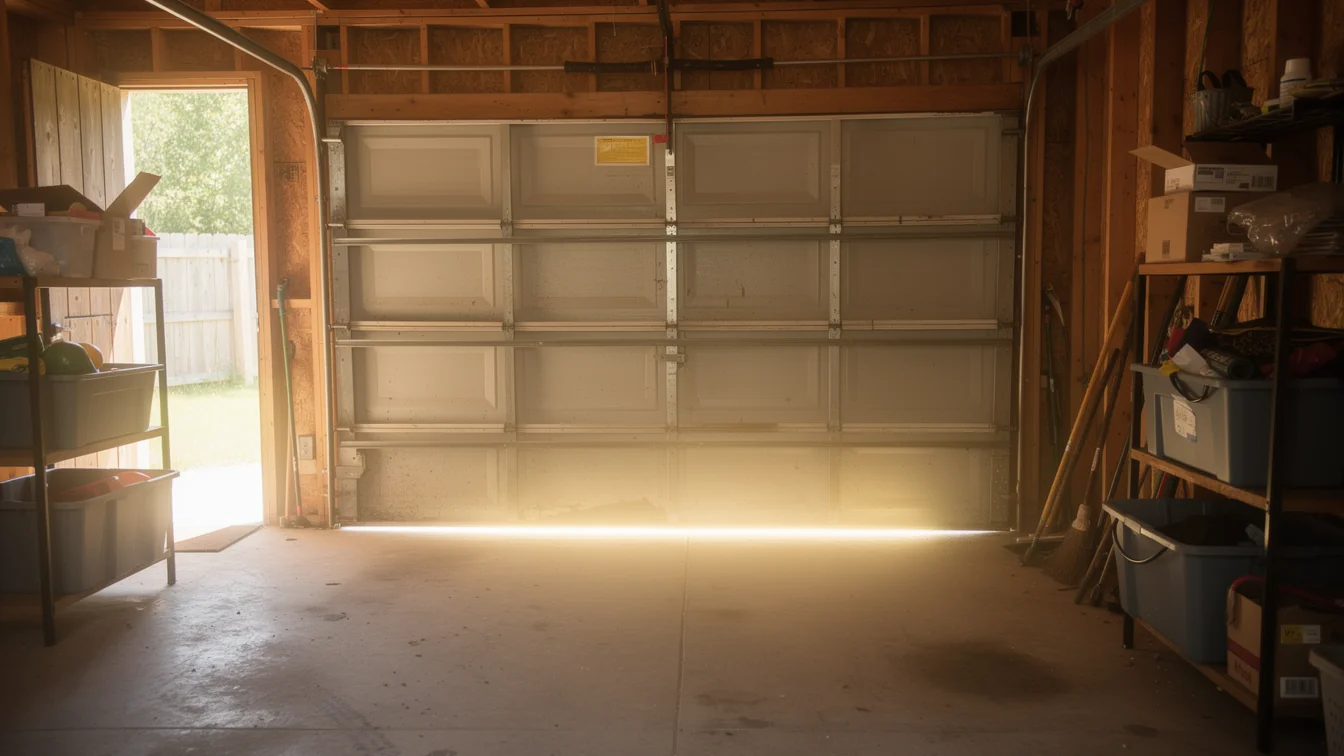 What Milford's Older Housing Stock Means for Your Garage Door
Milford's housing stock mostly dates to the 1960s and 70s, built before insulation codes existed.
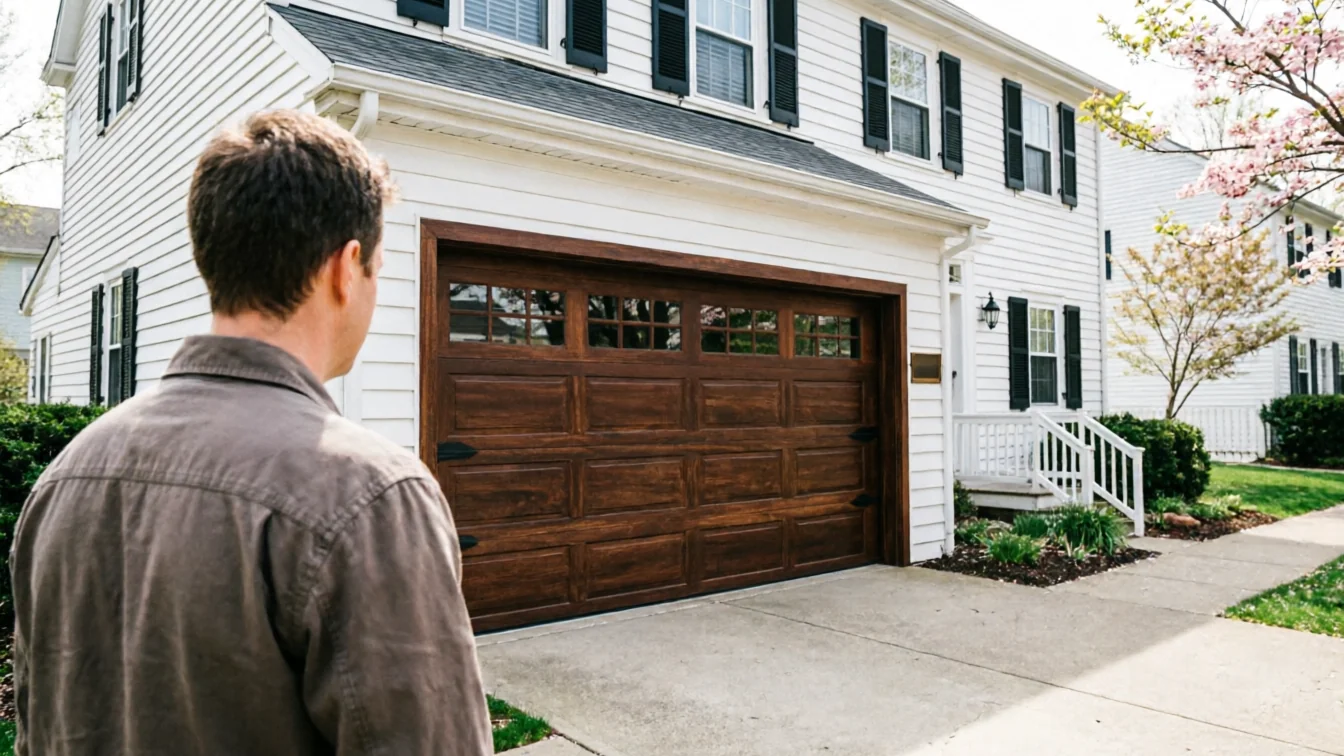 Why Replacing a Garage Door in Milford Isn't a One-Size Job
Milford homes built mostly between 1954 and 1986 often have garage openings sized for older standards and thin insulation - know this before replacing yours.
Ready when you are
Need a garage door sorted in Milford?
Milford Garage Door Pros repairs and installs garage doors, springs and openers in Milford, CT and the surrounding area.