 What That Grinding, Popping, or Banging Sound Actually Means
Milford homes built mostly between 1954 and 1986 have original garage hardware that grinds, pops, or slams in cold weather - here's what each sound means.
BlogMilford, CT · 4 min read
Weather Seals and Draughts in Milford Garage Doors
Milford homes built mostly 1954-1986 face real cold-climate draught problems at the garage door. Here's where seals fail first and what's worth fixing.
Local detail
How Local Conditions Play In
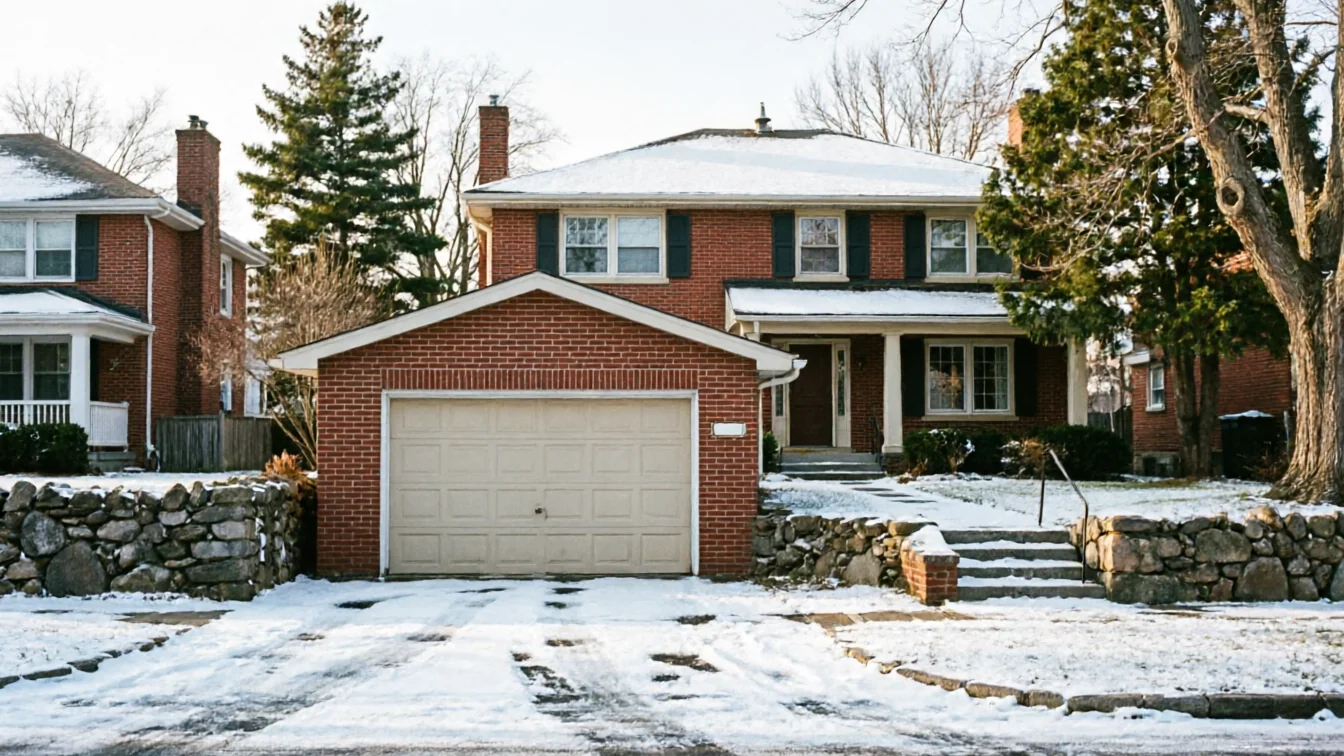
Most of the garage doors we look at in Milford sit on houses built somewhere between 1954 and 1986, with the median landing around 1971. That matters for seals specifically. A door frame poured in 1971 has had fifty-plus winters of freeze and thaw working on the slab and the jamb. The slab settles a quarter inch here, the jamb racks a sixteenth there, and now the bottom seal that fit perfectly when the house was new is riding on a gap it was never shaped for.
Milford sits in a cold, severe climate band, which means the seal isn't decorative trim - it's doing real work for months at a stretch. Wind-driven cold air through a bad bottom seal doesn't just make the garage uncomfortable. It finds its way along the shared wall into the house, and homeowners end up chasing a draught in the laundry room without ever checking the door six feet away.
Across the 35 named areas in this service territory, the pattern repeats: 1960s-70s construction, settled slabs, and a climate that punishes any gap wider than it should be. The fix is rarely exotic. It's almost always a seal and a threshold that stopped matching the opening years ago.
The area
Where People Go Wrong
The most common mistake we see is treating the bottom seal like a one-size part. On a house from this era, the track and jamb have moved enough that a stock seal from the hardware store often sits proud on one side and crushed on the other - which looks sealed from inside the garage but still lets cold air through at the low corner.
The second mistake is ignoring the side and top seals entirely because the bottom one is the obvious culprit. On older torsion setups common to 1960s and 70s Milford construction, the side seal track itself can be bent or loose at the fasteners, and no amount of new weatherstrip fixes that if the track isn't holding it flat against the jamb.
Third: people caulk around the frame instead of addressing the door-to-frame gap. Caulk stops water. It does nothing for the airflow that's coming through the moving seal itself, and in a cold-severe climate that's the gap that costs money all winter. None of this is complicated work, but it has to be diagnosed in the right order - seal, track, jamb - instead of swapped blind.
What we find
Leaving It Alone
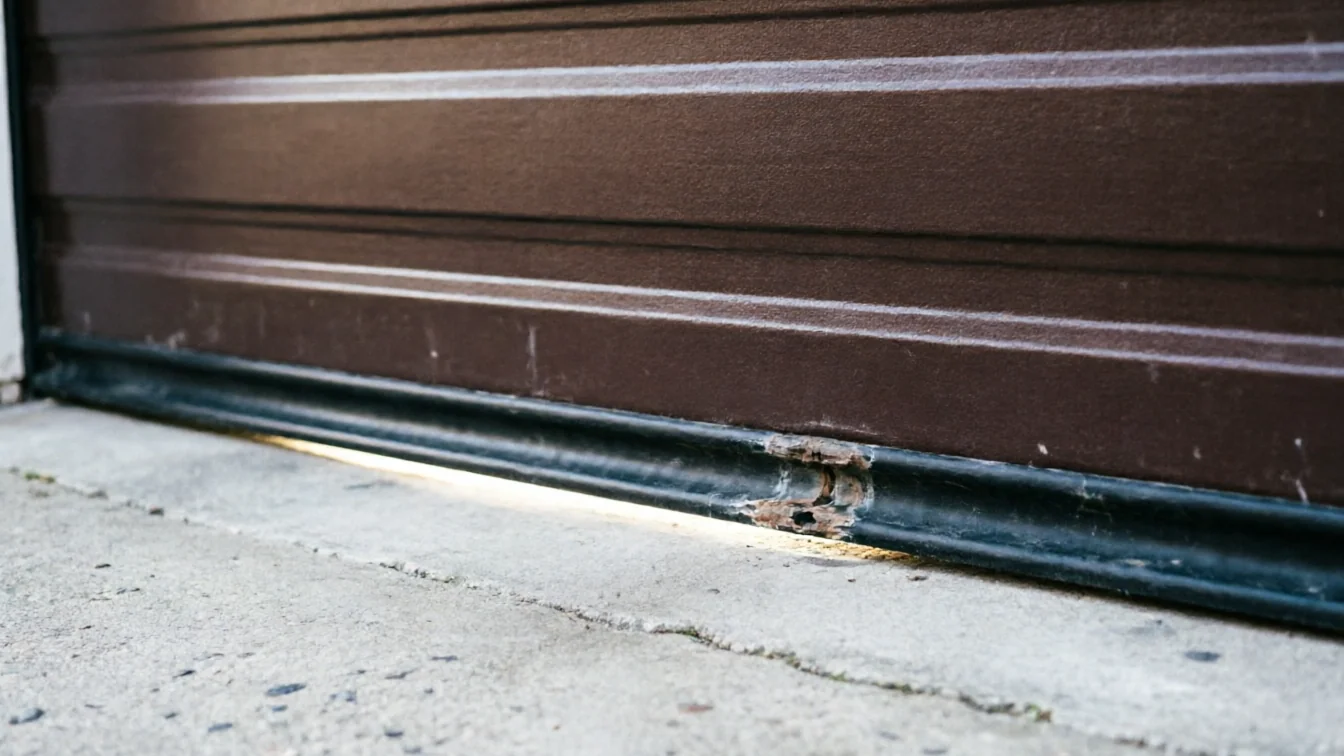
A worn seal on its own won't strand your car in the driveway. That's the honest limitation here: this isn't an emergency repair, and we won't tell you it is. But leaving it alone in a cold-severe climate has a cost that shows up somewhere else - usually the heating bill, sometimes condensation and rust on the bottom panel and track hardware once moisture starts working its way in through the gap each winter.
On houses built in the 1954-1986 window that make up most of this area's stock, that moisture problem compounds with age. Steel panels from that era weren't galvanized the way current stock is, and a seal that's been failing for a few winters can leave rust blooming along the bottom few inches of the door before anyone notices from the driveway.
The math is simple enough that we'll say it plainly: a seal and threshold job is cheap relative to a bottom panel replacement, and a lot cheaper than finding out the track rusted enough to bind the rollers. If you're not seeing daylight under the door yet, you've got time. If you are, you don't have much.
How we work
The Problem
Here's what we actually find on the truck, door after door in this area: a bottom seal that's hardened and cracked rather than worn flat, because Milford's cold-severe winters stiffen rubber faster than mild climates do. Hardened rubber doesn't flex to the slab - it just sits there with gaps at the low points, usually at the corners first.
The second thing we find, more often on the older end of that 1954-1986 range, is a threshold that was never installed at all. A lot of these houses predate aluminum threshold strips being standard, so the door is sealing against bare concrete that's cracked or sloped away from level after five decades of settling.
Both of these are straightforward to fix once identified, and neither requires replacing the door itself. What doesn't help is a seal swap without checking the threshold underneath it - you'll have new rubber sitting on the same bad concrete in six months. If your house falls in that older part of the build range, assume the threshold is part of the job, not an afterthought to it.
Questions
Common questions
Why does my garage feel drafty even with a newer weatherstrip?
On houses from the 1954-1986 era common in Milford, the slab and jamb have usually shifted enough that a stock seal doesn't sit flush anymore. New rubber on an out-of-level threshold still leaves gaps at the corners - the seal isn't the whole problem.
Is a seal replacement something I can put off?
Yes, within reason. It won't strand your car. But in a cold-severe climate it keeps costing you on heating and risks rust on the bottom panel and track hardware over a few winters. It's cheap to fix now and more expensive to ignore long-term.
Do older Milford garages even have a proper threshold?
Many don't. Houses on the older end of the 1954-1986 range often predate aluminum threshold strips being standard, so the door seals against bare, often-sloped concrete. Adding a proper threshold usually solves more than a new seal alone.
Recommendation
You Might Also Like
More garage door guides for Milford homeowners.
What That Grinding, Popping, or Banging Sound Actually Means
Milford homes built mostly between 1954 and 1986 have original garage hardware that grinds, pops, or slams in cold weather - here's what each sound means.
 What We Check First on a Milford Garage Door Call
Milford homes built mostly between 1954 and 1986 bring specific garage door wear in cold Connecticut winters.
 Why Milford's Older Housing Stock Loses Springs in a Cold Snap
Milford homes built mostly between 1954 and 1986 have torsion springs that fail more often in sharp cold snaps.
Ready when you are
Need a garage door sorted in Milford?
Milford Garage Door Pros repairs and installs garage doors, springs and openers in Milford, CT and the surrounding area.