
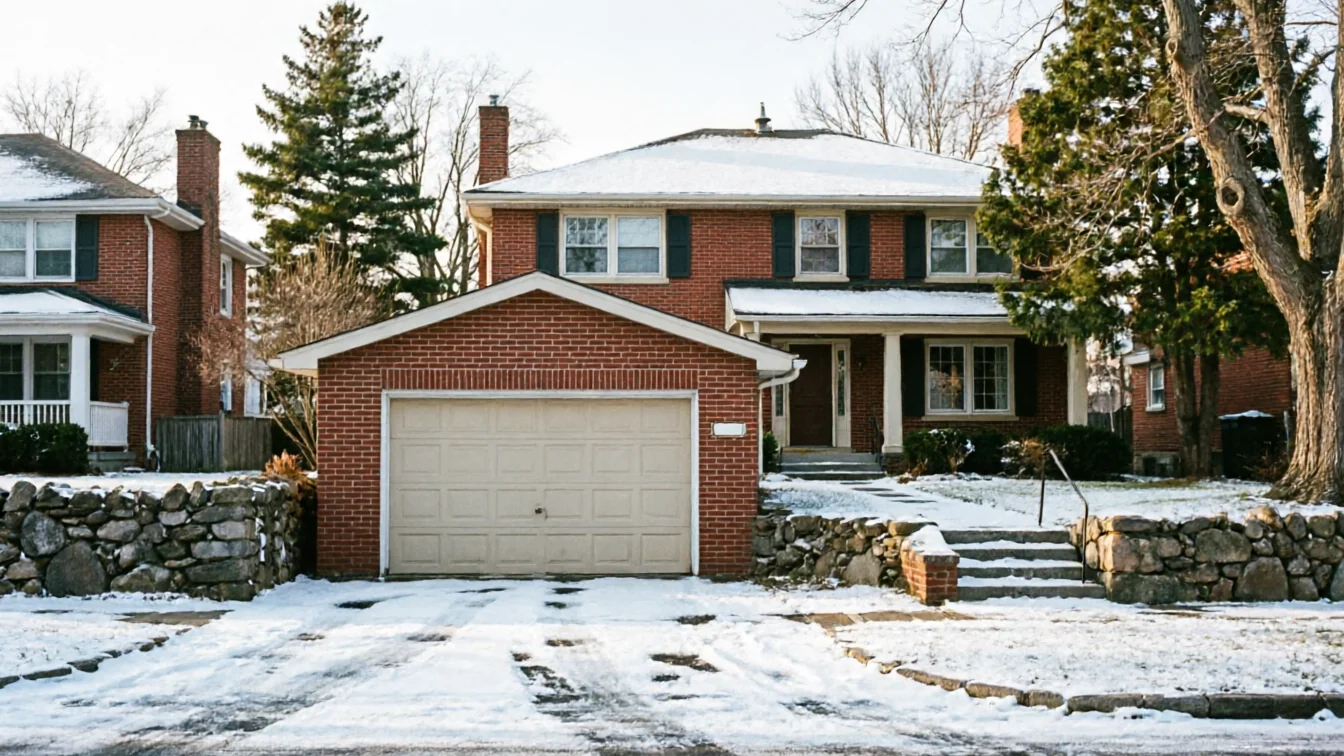
 Why Milford's Older Housing Stock Loses Springs in a Cold Snap
Milford homes built mostly between 1954 and 1986 have torsion springs that fail more often in sharp cold snaps.
BlogMilford, CT · 4 min read
What Milford's Older Housing Stock Means for Your Garage Door
Milford's housing stock mostly dates to the 1960s and 70s, built before insulation codes existed. Here's how that shows up in the garage door and what it means for repair.
Local detail
How Local Conditions Play In
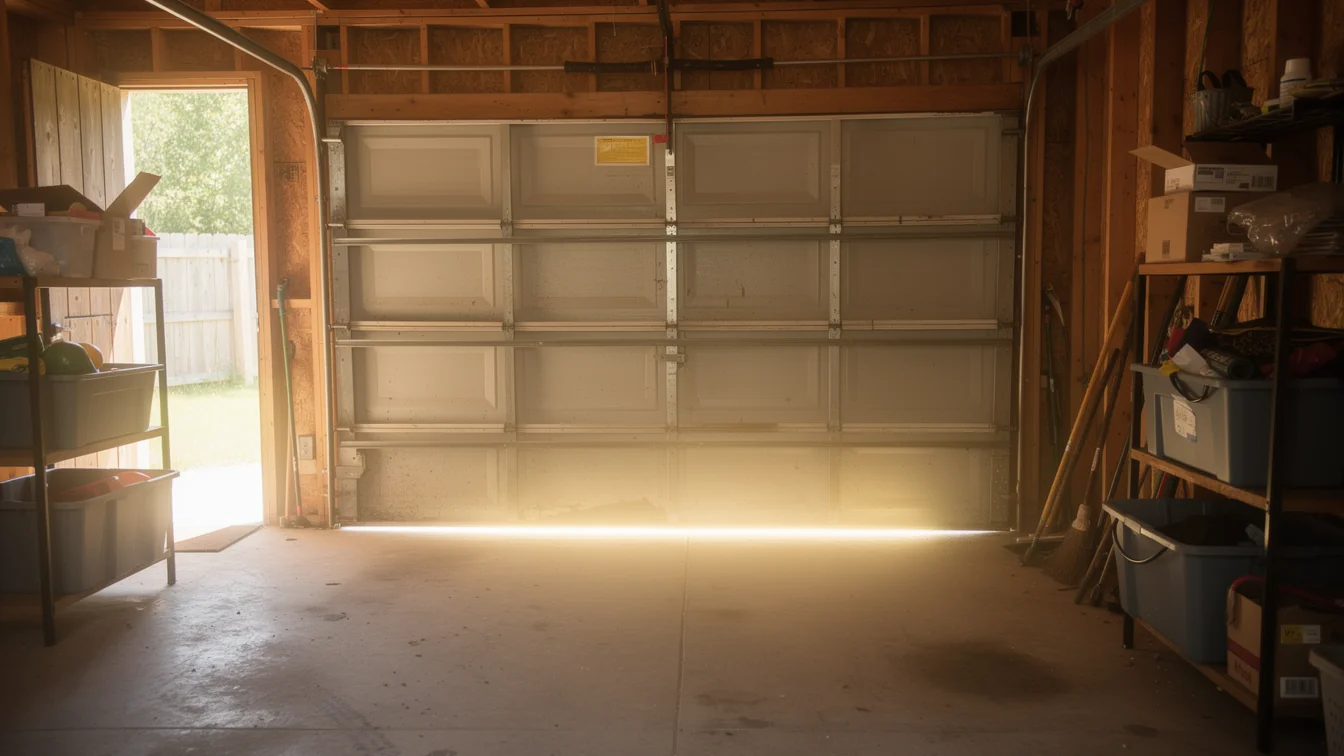
Most of the garage doors we look at in Milford sit on houses built between 1954 and 1986, with the median landing around 1971. That's not a small detail. A door installed on a house from that era went in before any insulation requirement applied to garage doors, which were treated as exterior sheds, not conditioned space. So you get a single layer of steel or wood, no foam core, no thermal break at the track, and often a wood jamb that's shrunk and shifted over fifty-plus years.
Pair that with a cold-climate winter and you get predictable failures: condensation on the inside face of an uninsulated steel panel, ice forming at the bottom seal where the slab has settled, and hardware that was never spec'd to handle the swelling and contraction cycle this many decades of freeze-thaw put on it. We see this pattern across the older sections of town where that 1960s-70s stock dominates, not as an occasional outlier but as the norm.
Newer doors with foam-injected panels and a vinyl bottom seal handle that cycle fine. Doors original to a 1960s build usually don't, because they were never designed to.
The area
Where People Go Wrong
The most common mistake we see on these older Milford houses is treating a hardware failure as a door failure. A torsion spring sized for a lightweight uninsulated panel in 1971 is not the same spring you'd put behind a heavier retrofit door today, and homeowners who've had an insulated replacement installed sometimes keep the original spring setup because nobody told them it needed to change.
The second mistake is ignoring the bottom seal until it's torn. On a slab that's had fifty years to settle, even a quarter inch of gap lets cold air and moisture straight into the garage, and in a cold-climate winter that moisture becomes frost on the inside of the door and rust at the track brackets. People patch the seal with whatever's on the shelf at the hardware store instead of matching it to the actual gap, which buys a season, not a fix.
Third: assuming the door and the opener age at the same rate. On houses this old, we routinely find a door shell from the original build paired with an opener from the 1990s or 2000s, because the opener failed first and got swapped without anyone looking hard at the panel and hardware underneath it.
What we find
Leaving It Alone
On a house built before insulation rules existed, an uninsulated door isn't automatically a problem to solve. If the garage is unheated and detached from living space, a bare steel panel from the 1960s or 70s can keep doing its job for years as long as the spring and rollers are sound and the bottom seal is doing its work. Replacing it purely for insulation value, when the attached space isn't conditioned, is money spent on a problem the house doesn't have.
Where it stops being fine to leave alone is when the door is attached to conditioned living space, which is common enough in this housing stock that it's worth checking. An uninsulated panel there is actively working against the heating bill all winter, and given a median household income in this area north of six figures, most owners we talk to would rather spend on a panel upgrade once than keep paying the energy penalty every season.
Our honest limit here: we don't do energy audits. We can tell you what the door and hardware are costing you in obvious terms, drafts, ice buildup, seal condition, but if you want a number on the heating bill, that's a job for someone else.
How we work
The Problem
Across the roughly 133,000 owner-occupied houses in this part of the service area, the core problem is the same one repeating itself: hardware and panels designed for a mid-century build, aging against a cold climate they weren't engineered for, on a house where nobody's touched the garage door system since it went in. That's not a design flaw from 1971. It's just fifty years of freeze-thaw cycles catching up with parts that were never meant to last that long without attention.
The fix isn't always full replacement. Sometimes it's re-spring and reseal on a shell that's still structurally sound. Sometimes the wood jamb has rotted enough at the base that no seal will hold and the frame needs work before the door does. We won't know which one your house needs without looking at it, and we won't guess over the phone just to get a truck out the door.
Questions
Common questions
Is my garage door too old to repair instead of replace?
Not necessarily. A door from the 1960s or 70s with a sound panel and no rot at the jamb is often worth re-springing and resealing rather than replacing. We look at the shell, the track, and the frame before we recommend either way, since age alone isn't the deciding factor.
Why does my garage door frost up on the inside in winter?
That's usually condensation hitting an uninsulated steel panel, common on doors original to the 1960s-70s housing stock here. Cold outside air meets warmer garage air at the metal surface. An insulated panel or a better bottom seal both reduce it, depending on what's actually letting the cold in.
Do I need a new opener if my door is original to the house?
Not automatically. We often find a newer opener already paired with an original door shell, since the opener tends to fail first. What matters is whether the spring tension still matches the door's actual weight, which we check before touching the opener at all.
Recommendation
You Might Also Like
More garage door guides for Milford homeowners.
Why Milford's Older Housing Stock Loses Springs in a Cold Snap
Milford homes built mostly between 1954 and 1986 have torsion springs that fail more often in sharp cold snaps.
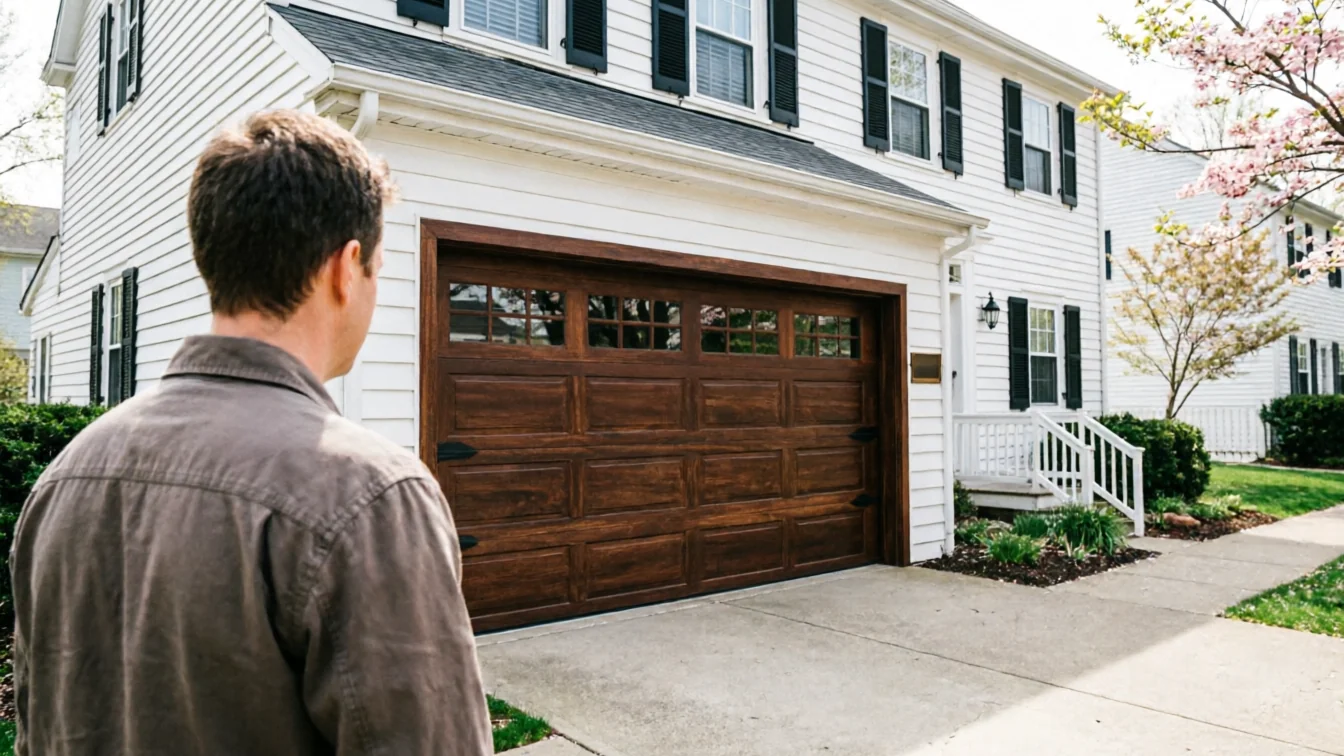 Why Replacing a Garage Door in Milford Isn't a One-Size Job
Milford homes built mostly between 1954 and 1986 often have garage openings sized for older standards and thin insulation - know this before replacing yours.
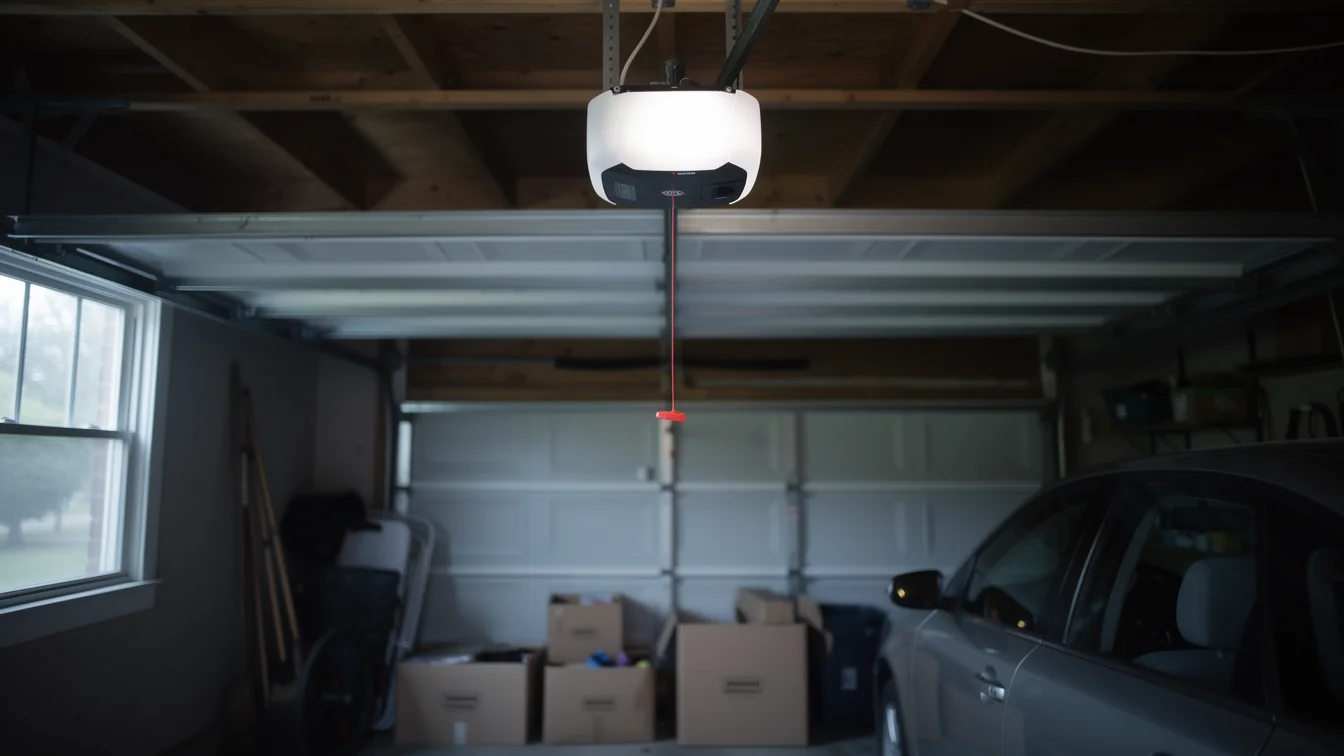 When the Power Drops, Your Opener Shows Its Age
Milford homes built 1954-1986 often pair old openers with manual release levers nobody's touched.
Ready when you are
Need a garage door sorted in Milford?
Milford Garage Door Pros repairs and installs garage doors, springs and openers in Milford, CT and the surrounding area.