 What That Grinding, Popping, or Banging Sound Actually Means
Milford homes built mostly between 1954 and 1986 have original garage hardware that grinds, pops, or slams in cold weather - here's what each sound means.
BlogMilford, CT · 4 min read
What We Check First on a Milford Garage Door Call
Milford homes built mostly between 1954 and 1986 bring specific garage door wear in cold Connecticut winters. Here's what we check first on every call.
Local detail
How Local Conditions Play In
Most houses in this part of Milford went up between 1954 and 1986, with the median sitting around 1971. That's a door and opener era before today's insulated steel sections and sealed bearing systems became standard - a lot of these garages still carry the original torsion hardware mounted on steel jambs that have seen fifty-plus winters of expansion and contraction. Connecticut's cold-climate band hits that older hardware hard. Steel torsion springs lose a measurable amount of lift as the temperature drops, so a spring that held a door steady in August can feel undersized by January. Nylon rollers from that era turn brittle in the cold and crack at the hub instead of wearing evenly. Lubricant that was fine at 60 degrees gums up at 20, which is exactly when a slow track starts binding instead of sliding. None of this is dramatic - it's slow wear that tracks exactly with the age of the house and the season. On a call in Milford, the first thing worth knowing is how old the door and track actually are, because a 1960s door responds to cold differently than a door installed ten years ago with modern composite rollers and galvanized track.
The area
Where People Go Wrong
Across the 35 neighborhoods we're familiar with in this stretch of the shoreline, the doors we see most often are original to houses built in the 1960s and 70s. The mistake we see constantly is treating these doors like new ones - spraying a degreaser-type lubricant on the springs because that's what the internet says, when that kind of product strips the lubricant these older coil springs actually need. The second mistake is ignoring a slow-opening door because it still works. On a torsion spring built for 1970s door weight, slow movement in cold weather is usually the spring losing tension, not just stiff cold metal - and a spring near the end of its cycle life can let go without warning once it's under extra load from the cold. The third mistake is replacing a cracked roller or a frayed cable piece by piece without checking the track alignment underneath, which on these older steel jambs has usually shifted slightly over fifty-plus years of the house settling. Fixing the part without checking the alignment just means the next part fails in the same spot within a season.
What we find
Leaving It Alone
Not every noise needs a truck. A door that's a little loud on cold mornings but opens and closes square is usually fine with a seasonal lube job, not a spring replacement. We also won't tell you to replace a sound 1970s-era wood or steel door just because it's old - if the panels aren't rotted or dented and the track still runs true, a tune-up and a new set of rollers can carry it for years. Where we draw the line: if the torsion spring is original to a house built before 1986, we don't recommend just cleaning it up and sending it back into service. Springs have a rated number of cycles, and a spring that old has already spent most of that life. We also don't stock every bracket or hinge style used on doors from that era - some of the low-headroom track hardware from the 1960s and 70s isn't made anymore, and if a part's broken on one of those we may need to source or adapt rather than swap in stock. That's a real limitation, not a sales pitch, and we'll tell you before we start the job, not after.
How we work
The Problem
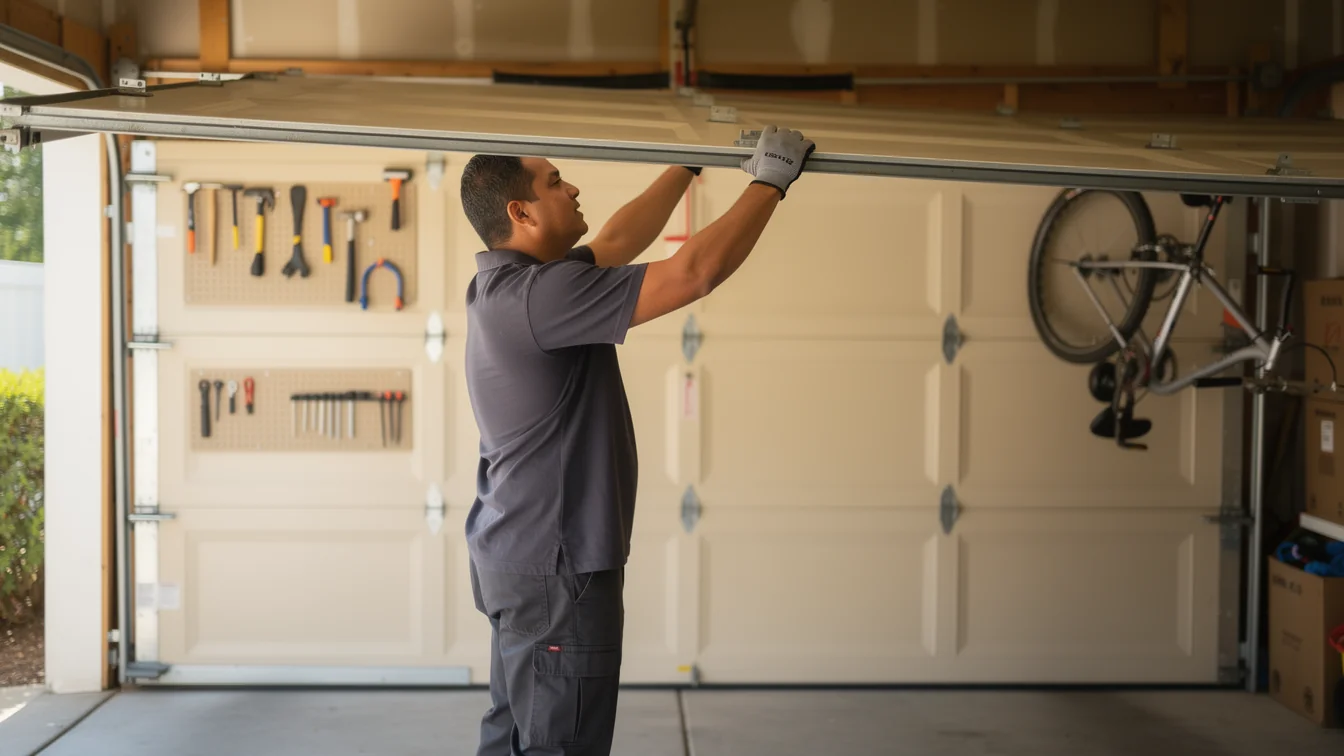
On a service call here, the first five minutes go the same way regardless of what the homeowner called about. We check the build date if we can - a door from the 1971 median year of construction gets a different inspection than one installed last decade. We check torsion spring wind and cable wear first, because in a cold-climate area like this, a spring near the end of its life is the most common thing that turns into an emergency call. We check roller material - steel or nylon on an older door moves differently in cold weather than modern composite, and the sound a homeowner calls in about is often just that difference. We check track alignment against the jamb, since houses built in the 1960s and 70s have had decades to settle and shift the plumb line the door rides on. Last, we check the opener's force settings, because an opener matched to a lighter original door can over-torque if panels or hardware were swapped out at some point without resetting it. None of this is guesswork - it's the order that matches what actually fails first on a door built in this era, in this climate.
Questions
Common questions
Why does my garage door get slower in winter?
On an older torsion spring, cold temperatures reduce how much lift the coil delivers, so a door that moves fine in summer can drag or hesitate once it's cold. On houses built in the 1960s and 70s, that spring is often original, which makes the slowdown more noticeable than on newer hardware rated for current loads.
My garage door is from the 1970s - is it worth repairing?
Often yes. If the panels aren't rotted or dented and the track still runs true, a tune-up with new rollers and cable adjustment can keep a door from that era working for years. The exception is the original torsion spring - if it's that old, we'll recommend replacing it rather than reusing it.
Do you carry parts for older torsion hardware?
Not always on the truck. Some low-headroom brackets and hinge styles used on doors built in the 1960s and 70s aren't made anymore, so a broken part on that hardware sometimes means sourcing or adapting a replacement rather than a same-day swap. We'll tell you up front if that's the case.
Recommendation
You Might Also Like
More garage door guides for Milford homeowners.
What That Grinding, Popping, or Banging Sound Actually Means
Milford homes built mostly between 1954 and 1986 have original garage hardware that grinds, pops, or slams in cold weather - here's what each sound means.
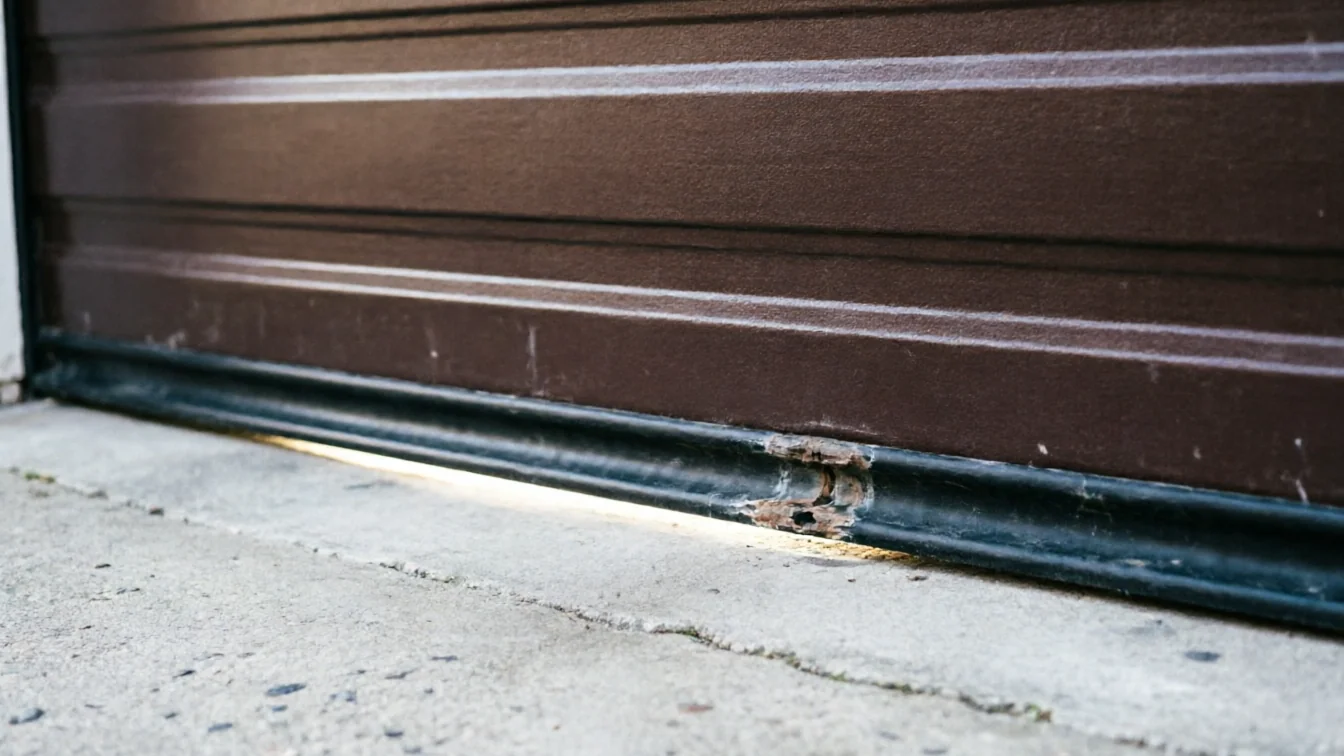 Weather Seals and Draughts in Milford Garage Doors
Milford homes built mostly 1954-1986 face real cold-climate draught problems at the garage door.
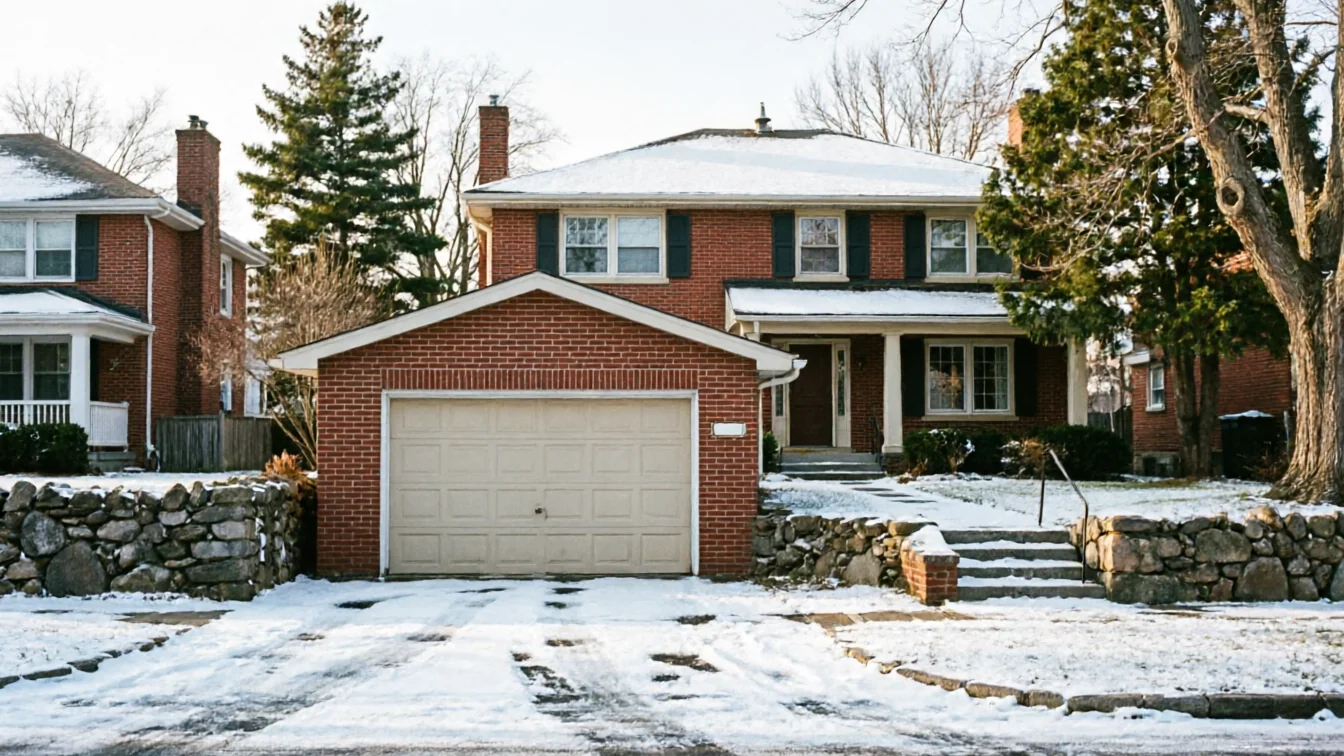 Why Milford's Older Housing Stock Loses Springs in a Cold Snap
Milford homes built mostly between 1954 and 1986 have torsion springs that fail more often in sharp cold snaps.
Ready when you are
Need a garage door sorted in Milford?
Milford Garage Door Pros repairs and installs garage doors, springs and openers in Milford, CT and the surrounding area.